
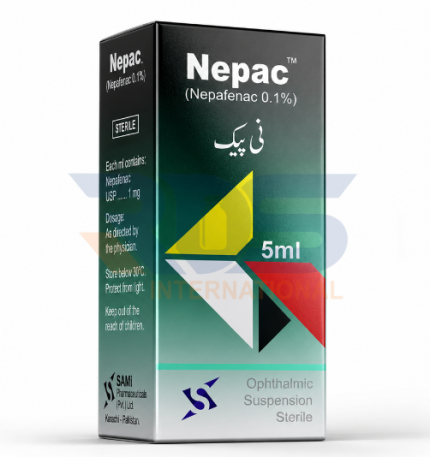
Nepac Eye Drops 5ml (Nepafenac) – sante (private) limited
Used For
Eye Inflammation
How It Works
Nepafenac is a non-steroidal anti-inflammatory drug (NSAID) available as a prodrug. After being applied to the eye, it penetrates the cornea and is converted by ocular tissue hydrolases into its active form, amfenac. Amfenac works by blocking the cyclooxygenase (COX) enzyme, which is responsible for producing prostaglandins—substances that cause pain and inflammation. This helps reduce eye inflammation and discomfort.
Usage & Safety
Dosage
Instill one drop into the affected eye(s) three times daily—morning, afternoon, and evening. Use the drops at the same time each day or as directed by your physician.
Side Effects
Like all medicines, Nepafenac may cause side effects, although not everyone experiences them.
Eye-related side effects:
Eye pain or discomfort
Dry eyes
Eyelid swelling
Eye irritation
Itchy eyes
Eye discharge
Allergic conjunctivitis (eye allergy)
Increased tear production
Eye redness
Deposits on the surface of the eye
Swelling or fluid buildup at the back of the eye (macular edema)
Iris inflammation
General side effects:
Headache
Dizziness
Nausea
Allergic reactions, including eyelid swelling
Skin inflammation, redness, or itching
Drug Interactions
Inform your doctor or pharmacist if you are taking, have recently taken, or plan to take any other medicines. Nepafenac may interact with other eye drops, including medications used to treat glaucoma. Tell your doctor if you are using blood-thinning medicines such as warfarin or other NSAIDs, as these may increase the risk of bleeding.
Indications
Nepafenac Ophthalmic Suspension is indicated in adults for:
Prevention and relief of eye pain and inflammation following cataract surgery.
Reduction of the risk of macular edema (swelling at the back of the eye) after cataract surgery in diabetic patients.
When Not to Use
Do not use this medicine if:
You are allergic to Nepafenac or any of its ingredients.
You are allergic to other non-steroidal anti-inflammatory drugs (NSAIDs).
You have previously experienced asthma, severe skin allergies, or nasal inflammation after using NSAIDs such as aspirin (acetylsalicylic acid), ibuprofen, ketoprofen, piroxicam, or diclofenac.
Precautions
Topical NSAIDs may cause keratitis (inflammation of the cornea). In some patients, prolonged use may lead to corneal epithelial damage, corneal thinning, erosion, ulceration, or even corneal perforation, which may threaten vision. If signs of corneal damage occur, discontinue the medicine immediately and consult your eye specialist for close monitoring.
Warnings
Topical anti-inflammatory medicines may mask the signs of an acute eye infection. Since NSAIDs do not have antibacterial properties, they should be used with anti-infective medicines only under medical supervision.
Contact lenses are generally not recommended during the recovery period after cataract surgery. Wear them only if advised by your doctor.
This medicine is for ophthalmic use only. Do not inject or swallow the product.
Additional Information
Pregnancy
If you are pregnant, planning to become pregnant, or breastfeeding, consult your physician before using this medicine.
Storage
Store at room temperature, away from direct heat and sunlight. Keep the bottle tightly closed and out of the reach of children.
Ye version website ke liye zyada professional, readable aur SEO-friendly hai, aur baaki medicines ki descriptions ke pattern se bhi match karega.
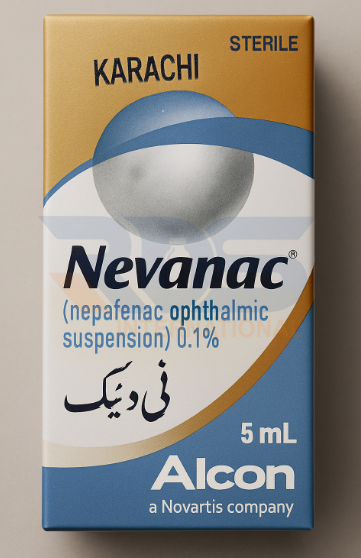
Nevanac Eye Drop 0.1% 5ml(Nepafenac) – Alcon
Eye Inflammation
How it works
Nepafenac is a non-steroidal anti-inflammatory and analgesic prodrug. After topical ocular dosing, nepafenac penetrates the cornea and is converted by ocular tissue hydrolases to amfenac, a nonsteroidal anti-inflammatory drug. Amfenac inhibits the action of prostaglandin H synthase (cyclooxygenase), an enzyme required for prostaglandin production.
Usage And Safety
Dosage
One drop in the affected eye or eyes, three times a day - morning, midday, and evening. Use at the same time each day . Or As directed by your physician.
Side Effects
Effects in the eye: Iris inflammation, eye pain, eye discomfort, dry eye, eyelid swelling, eye irritation, itchy eye, eye discharge, allergic conjunctivitis (eye allergy), increased tear production, deposits on the eye surface, fluid or swelling at the back of the eye, eye redness. General side effects: Dizziness, headache, allergic symptoms (eyelid allergic swelling), nausea, skin inflammation, redness and itching.
Drug Interactions
Tell your doctor or pharmacist if you are taking, have recently taken or might take any other medicines. Nepafenac can affect or be affected by other medicines you are using, including other eye drops for the treatment of glaucoma. Also tell your doctor if you are taking medicines that reduce blood clotting (warfarin) or other NSAIDs. They may increase the risk of bleeding.
Indication
It is to be used by adults to prevent and relieve eye pain and inflammation following cataract surgery on the eye and to reduce the risk of macular oedema (swelling in the back of the eye) following cataract surgery on the eye in diabetic patients .
When not to Use
Do not use - If you are allergic to nepafenac or any of the other ingredients of this medicine . - If you are allergic to other nonsteroidal anti-inflammatory drugs (NSAID) - If you have experienced asthma, skin allergy, or intense inflammation in your nose when using other NSAIDs. Examples of NSAIDs are: acetylsalicylic acid, ibuprofen, ketoprofen, piroxicam, diclofenac .
Precautions
Use of topical NSAIDs may result in keratitis. In some susceptible patients, continued use of topical NSAIDs may result in epithelial breakdown, corneal thinning, corneal erosion, corneal ulceration or corneal perforation . These events may be sight threatening. Patients with evidence of corneal epithelial breakdown should immediately discontinue use of nepafenac and should be monitored closely for corneal health.
WARNING:-
An acute ocular infection may be masked by the topical use of anti-inflammatory medicines. NSAIDs do not have any antimicrobial properties. In case of ocular infection, their use with anti-infectives should be undertaken with care.
Wearing contact lens is not recommended during the postoperative period following cataract surgery. Therefore, patients should be advised not to wear contact lenses unless clearly indicated by their doctor.
The product should not be injected. Patients should be instructed not to swallow nepafenac .
Additional Information
Pregnancy category
Always consult your physician before using any medicine.
Storage (YES/NO)
Store this medicine at room temperature, away from direct light and heat.