
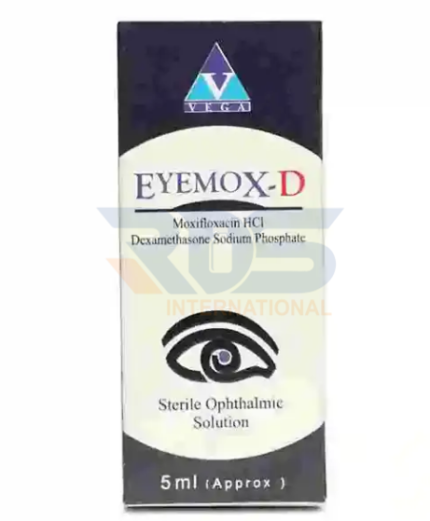
Eyemox-D Eye Drops 5ml (Moxifloxacin , Dexamethasone) – Vega pharma
**Eye Infection**
### How it Works
Moxifloxacin is a synthetic fluoroquinolone antibacterial agent that demonstrates in-vitro activity against a wide range of Gram-positive and Gram-negative ocular pathogens, atypical microorganisms, and anaerobic bacteria. It exerts its antibacterial effect by inhibiting topoisomerase II (DNA gyrase) and topoisomerase IV. DNA gyrase is an essential enzyme involved in bacterial DNA replication, transcription, and repair, while topoisomerase IV plays an important role in the separation of chromosomal DNA during bacterial cell division.
Dexamethasone is a highly potent, long-acting glucocorticoid. Corticosteroids act by binding to specific receptor molecules within responsive cells. They inhibit phospholipase A2 activity, thereby reducing the formation of inflammatory mediators such as prostaglandins. Corticosteroids also cause a temporary reduction in lymphocyte levels through cellular redistribution, affecting T lymphocytes more significantly than B lymphocytes. In addition, they decrease lymphokine production, reduce macrophage responsiveness, delay epithelial regeneration, suppress post-inflammatory neovascularization, and help restore the permeability of inflamed capillaries toward normal levels. Together, these actions contribute to the anti-inflammatory properties of dexamethasone.
### Usage and Safety
**Dosage**
Adults: Instill one or two drops into the conjunctival sac every 4 to 6 hours. During the first 24 to 48 hours of treatment, the dosage may be increased to 1–2 drops every 2 hours if required. The frequency should then be gradually reduced according to clinical improvement. Therapy should not be discontinued prematurely and should be used as directed by the physician.
**Side Effects**
Possible side effects may include:
* Conjunctival irritation
* Increased lacrimation
* Keratitis
* Papillary conjunctivitis
* Secondary infection
**Drug Interactions**
Use caution when taking with:
* Atropine and related compounds
* Phenytoin
* Phenobarbitone
* Ephedrine
* Rifampicin
**Indication**
Indicated for steroid-responsive inflammatory eye conditions where corticosteroid therapy is required and where bacterial infection is present or there is a risk of bacterial ocular infection. It is also used for post-operative inflammation and other ocular inflammatory conditions associated with infection.
**When Not to Use**
This medication is contraindicated in patients with known hypersensitivity to Moxifloxacin, other quinolone antibiotics, or any component of the formulation.
### Precautions
**Precaution**
Serious and occasionally fatal hypersensitivity (anaphylactic) reactions have been reported in patients receiving systemically administered quinolones, including Moxifloxacin. Some reactions have occurred following the first dose.
### Warnings
Patients should avoid activities requiring full mental alertness and coordination, such as operating machinery, until they know how these eye drops affect them.
If any allergic reaction to Moxifloxacin develops, discontinue the medication immediately. Severe acute hypersensitivity reactions may require urgent medical intervention.
**Adrenocortical Insufficiency:** Secondary adrenocortical insufficiency induced by corticosteroids may occur if treatment is stopped too quickly. This risk can be minimized through gradual dose reduction.
### Additional Information
**Pregnancy Category**
Always consult a healthcare professional before using any medication during pregnancy.
**Storage (YES/NO)**
Store at room temperature and protect from direct heat and light.